
Genetic relationships in surrogacy for couples over 40
- Julia Myronenko
- a few seconds ago
- 8 min read

Surrogacy offers couples over 40 a path to parenthood, but the genetic relationships formed differ significantly from traditional conception. When you use donor eggs, donor sperm, or a combination of your own gametes with assisted reproductive technologies, the biological connections to your child change in important ways. Ukraine has become a popular destination for international surrogacy, yet this choice involves unique medical risks, genetic considerations, and legal complexities that demand careful understanding before moving forward.
Table of Contents
Key takeaways
Point | Details |
Genetic connections vary | Whether you use your own eggs and sperm or donor gametes determines the genetic relationship to your child. |
Age increases risks | Maternal age over 40 combined with ART raises pregnancy complications including preeclampsia and preterm birth. |
Legal protections matter | Ukraine faces serious concerns about surrogate exploitation and contract fairness requiring careful agency selection. |
Genomics improve outcomes | Advanced genetic screening and real-world data help identify risks and personalize care for better results. |
How genetic relationships work in surrogacy
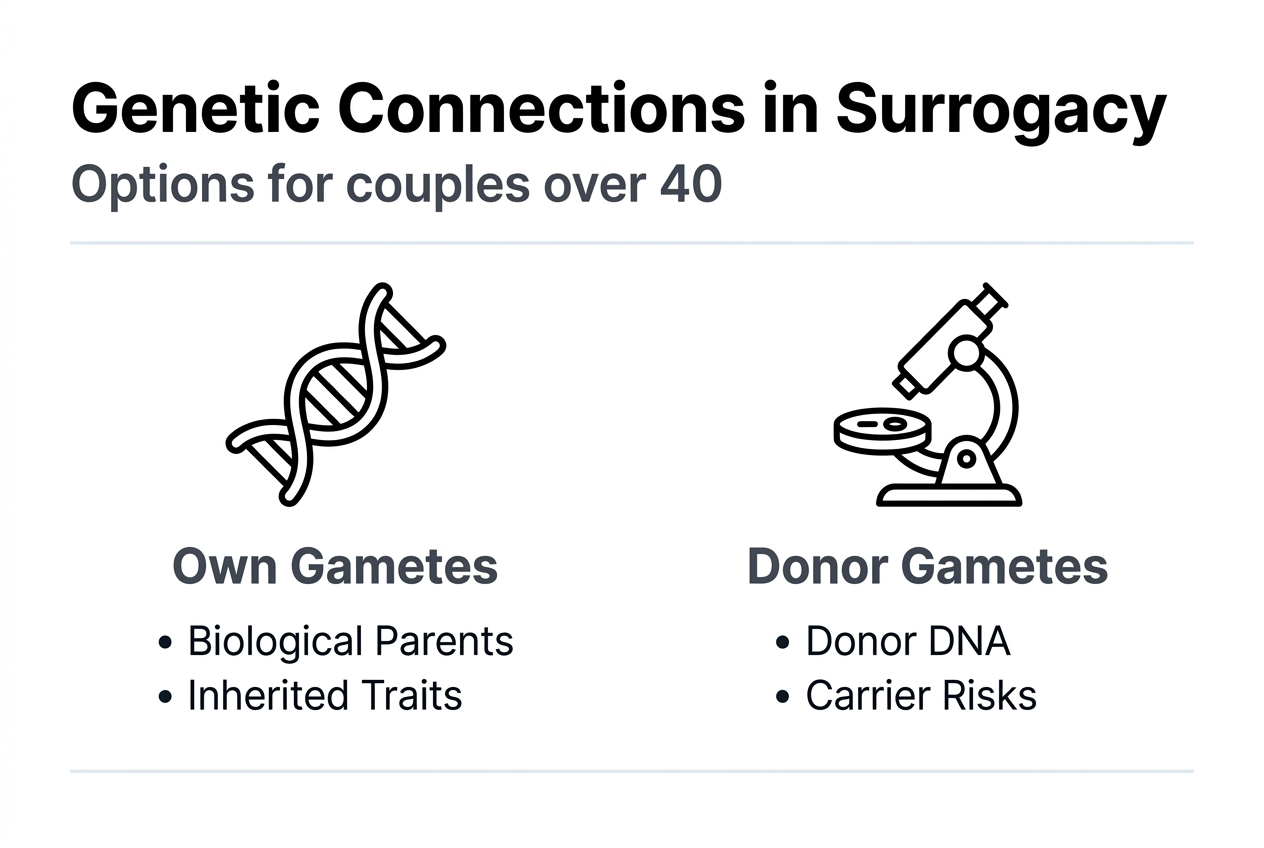
In surrogacy arrangements, genetic parenthood depends entirely on whose gametes create the embryo. The surrogate mother, acting as a gestational carrier, carries the pregnancy but typically has no genetic connection to the baby. Your genetic relationship to the child varies based on which reproductive cells you use.
Several scenarios determine genetic ties:
Using the intended mother’s egg and intended father’s sperm creates full genetic parenthood for both partners
Using a donor egg with the intended father’s sperm means only the father has a genetic link
Using the intended mother’s egg with donor sperm means only the mother has a genetic link
Using both donor egg and donor sperm means neither intended parent has a genetic connection
Genomic technologies enable identification of infertility-related variants and prevention of genetic conditions before embryo transfer. These tools become especially valuable for couples over 40, where age-related genetic risks in eggs increase the chance of chromosomal abnormalities. Understanding your genetic background and potential inherited conditions helps you make informed decisions about using your own gametes versus donors.
Ukraine’s surrogacy framework permits both scenarios, allowing intended parents to use their own gametes or donor materials depending on medical need and personal preference. The compensated surrogacy Ukraine guide explains how these arrangements work legally and medically in the Ukrainian context.
Pro Tip: Request preimplantation genetic testing for embryos if you’re using your own eggs over age 40, as this screens for chromosomal abnormalities before transfer and improves success rates.
Risks and outcomes with advanced maternal age and assisted reproductive technologies in surrogacy
Advanced maternal age increases miscarriage, gestational diabetes, hypertensive disorders, placental abnormalities, cesarean delivery, preterm birth, stillbirth, and NICU admissions. When you’re over 40 and using your own eggs, these risks compound because egg quality naturally declines with age, leading to higher rates of genetic abnormalities in embryos.

Assisted reproductive technologies add their own independent risk layer. ART was independently associated with increased risks of preeclampsia, cesarean delivery, and preterm birth, even when controlling for maternal age. The mechanisms behind these ART-related risks include hormonal stimulation effects, laboratory culture conditions, and the underlying fertility issues that necessitated ART in the first place.
When you combine advanced maternal age with ART, the risks multiply rather than simply add together. This synergistic effect means your surrogacy pregnancy requires high-risk obstetric management from the start. Interestingly, using donor oocytes from younger women reduces miscarriage risk but may increase preeclampsia risk due to immune factors related to carrying a genetically unrelated pregnancy.
Risk Factor | AMA Alone | ART Alone | AMA + ART Combined |
Preeclampsia | Elevated | Elevated | Significantly elevated |
Preterm birth | Moderate increase | Moderate increase | High increase |
Cesarean delivery | Increased | Increased | Substantially increased |
Miscarriage | Higher | Variable | Reduced with donor eggs |
Your surrogacy process for couples over 40 should include specialized prenatal monitoring, frequent ultrasounds, and close coordination between your fertility clinic and the surrogate’s obstetric team. Blood pressure monitoring, glucose screening, and fetal growth assessments become especially critical.
Pro Tip: Ensure your surrogacy contract specifies access to high-risk maternal-fetal medicine specialists and includes coverage for potential NICU care, as these become more likely with AMA and ART.
Legal and ethical considerations for surrogacy in Ukraine
Ukraine’s surrogacy industry has attracted international attention, but not always for positive reasons. Israel warns against surrogacy in Ukraine citing exploitation and human trafficking concerns. Ukraine is now the third country flagged in recent years for similar concerns, joining Cambodia and Nepal.
Reports document harsh conditions for surrogate mothers, including:
Language barriers preventing surrogates from understanding contract terms
Inadequate medical care and monitoring during pregnancy
Excessive control over surrogate mothers’ daily lives and movements
Financial exploitation where agencies capture most compensation
Lack of legal protections if complications arise
The legal framework governing surrogacy in Ukraine remains complex and sometimes unclear. Contracts may not provide adequate protections for either surrogates or intended parents in dispute situations. Genetic parenthood rights can become contested, particularly when cross-border issues arise or when pregnancies don’t proceed as planned.
“The Israeli government has issued official warnings about the risks of pursuing surrogacy arrangements in Ukraine, highlighting serious concerns about exploitation, inadequate legal protections, and potential human trafficking within the commercial surrogacy industry.”
To navigate these challenges safely, you should:
Research agencies thoroughly and verify their legal standing and reputation
Ensure surrogates receive independent legal counsel separate from the agency
Verify that surrogate compensation is fair and paid directly, not controlled by agencies
Understand both Ukrainian law and your home country’s laws regarding parentage
Document all agreements in writing with clear terms about medical decisions and complications
Work with international family law attorneys experienced in cross-border surrogacy
The surrogacy agency checklist Ukraine provides detailed criteria for evaluating agencies based on ethical practices, legal compliance, and surrogate welfare standards.
Using genomics and real-world data to improve surrogacy outcomes and genetic risk management
Advanced genomic technologies transform how you can approach genetic risk in surrogacy. Integration of genomics technologies and RWD can support predictive, personalized care tailored to your specific genetic profile and family history. These tools move beyond basic genetic screening to comprehensive analysis of fertility-related variants and inherited condition risks.
Real-world data enhances this approach by drawing on actual patient outcomes rather than controlled clinical trials alone. RWD enhances evidence by capturing diverse populations, supporting comparative and long-term analyses that reveal how different genetic profiles and treatment approaches perform across varied circumstances. This becomes especially valuable in cross-border surrogacy where populations and practices differ.
To incorporate genomics and real-world data into your surrogacy planning:
Complete comprehensive genetic carrier screening for both intended parents before embryo creation
Request preimplantation genetic testing for aneuploidy if using eggs from a woman over 38
Consider expanded carrier screening panels that test for hundreds of recessive conditions
Review your fertility clinic’s success rates stratified by maternal age and specific diagnoses
Ask about the clinic’s data sharing practices and whether they contribute to outcome registries
Discuss family health history with genetic counselors who can assess inherited risk patterns
Approach | Traditional Care | Genomics/RWD-Enhanced Care |
Genetic screening | Basic carrier panel | Comprehensive genomic analysis |
Risk assessment | Population averages | Personalized risk prediction |
Embryo selection | Morphology only | Genetic testing plus morphology |
Outcome prediction | General statistics | Real-world data matched to your profile |
Long-term monitoring | Limited follow-up | Registry participation and tracking |
The Nova Parent surrogacy agency Ukraine connects you with clinics offering advanced genetic technologies and participates in outcome tracking that contributes to the real-world data improving future care.
Pro Tip: Request a copy of all genetic testing results and reports for your personal records, as these may prove valuable for your child’s future medical care and family planning.
Explore safe and expert surrogacy options with Nova Parent in Ukraine
Navigating the complexities of genetic relationships, medical risks, and legal protections in Ukrainian surrogacy requires expert guidance you can trust. Nova Parent specializes in supporting couples over 40 through every step of the surrogacy journey, integrating genetic counseling, medical care coordination, and robust legal protections into transparent, ethical arrangements.

Our team understands the unique challenges you face when considering surrogacy after 40, from age-related fertility concerns to the heightened pregnancy risks discussed in this guide. We partner exclusively with Ukrainian clinics offering advanced genomic screening and work only with agencies that prioritize surrogate welfare and fair compensation. Every arrangement includes independent legal representation for surrogates and comprehensive contract review to protect your parental rights.
Explore detailed surrogacy cost details with transparent pricing that covers medical care, legal services, and surrogate compensation without hidden fees. Ready to discuss your specific situation? Book surrogacy consultation online with our experienced team to create a personalized plan addressing your genetic, medical, and legal needs. Visit Nova Parent surrogacy agency to learn how we make safe, ethical surrogacy accessible for couples over 40.
FAQ
Can the surrogate mother be the genetic mother?
In most modern surrogacy arrangements, the surrogate serves only as a gestational carrier with no genetic connection to the baby. The embryo is created using either the intended parents’ gametes or donor eggs and sperm, then transferred to the surrogate’s uterus. Traditional surrogacy, where the surrogate provides her own egg and is artificially inseminated, is less common today due to legal and emotional complexities.
What risks should couples over 40 consider in surrogacy pregnancies?
Couples over 40 face elevated risks including miscarriage, preeclampsia, preterm birth, and cesarean delivery, especially when using the intended mother’s own eggs. Assisted reproductive technologies add independent risk factors that compound with advanced maternal age. Using donor eggs from younger women reduces some genetic risks but may increase immune-related complications. All surrogacy pregnancies for couples over 40 should receive high-risk obstetric management.
Are there special legal concerns with surrogacy in Ukraine?
Ukraine faces significant concerns about surrogate exploitation, inadequate legal protections, and contract fairness that have prompted official warnings from some governments. The legal framework continues evolving, creating uncertainty about parentage rights and dispute resolution. Choosing reputable agencies with transparent practices, ensuring surrogates receive independent legal counsel, and working with international family law attorneys experienced in Ukrainian surrogacy are essential protections.
How does advanced genetic screening improve surrogacy outcomes?
Comprehensive genetic screening identifies carrier status for hundreds of inherited conditions, allowing you to make informed decisions about using your own gametes versus donors. Preimplantation genetic testing screens embryos for chromosomal abnormalities before transfer, significantly improving success rates for women over 40. These genomic technologies also reveal fertility-related variants that may affect treatment approaches, enabling personalized care plans that optimize your chances of a healthy pregnancy.
What should I look for in a Ukrainian surrogacy agency?
Prioritize agencies with verified legal standing, transparent financial practices, and documented surrogate welfare protections. The agency should provide surrogates with independent legal counsel, fair direct compensation, and quality medical care. Look for partnerships with accredited fertility clinics offering advanced genetic technologies and outcome tracking. Verify the agency’s track record with couples over 40 specifically, as this demographic requires specialized medical and genetic expertise.
Does using donor eggs eliminate age-related pregnancy risks?
Donor eggs from younger women eliminate genetic risks associated with egg quality decline but don’t remove all age-related factors. The surrogate’s age and health matter more than the intended mother’s age for pregnancy complications. However, immune factors related to carrying a genetically unrelated pregnancy may increase preeclampsia risk even with donor eggs. ART procedures themselves carry independent risks regardless of gamete source, requiring careful medical management throughout the pregnancy.
Recommended