
Surrogacy process step by step for couples over 40
- Julia Myronenko
- 2 days ago
- 11 min read


Starting a family through international surrogacy after age 40 can feel overwhelming with its complex medical protocols, legal requirements, and emotional challenges. Many couples struggle to know where to begin or how to navigate surrogacy journeys lasting 12 to 18 months across multiple countries. This guide breaks down each phase into clear, actionable steps so you can approach your surrogacy journey with confidence and clarity.
Table of Contents
Key takeaways
Point | Details |
Step-by-step process essential for 40+ couples | A structured approach reduces overwhelm and improves success rates for older intended parents |
Matching and legal agreements protect everyone | Psychological compatibility and enforceable contracts prevent disputes and create strong foundations |
Medical IVF monitoring ensures pregnancy success | Careful screening and cycle management optimize embryo implantation and healthy pregnancy outcomes |
Post-birth legal steps confirm parental rights | Proper documentation secures custody and citizenship when navigating international surrogacy |
Avoiding common mistakes improves outcomes | Legal counsel, open communication, and financial planning prevent 70% of typical failure points |
Introduction and prerequisites
Understanding surrogacy types forms your foundation. Gestational surrogacy uses the intended mother’s or donor’s eggs, meaning the surrogate carries a baby with no genetic connection to her. Traditional surrogacy involves the surrogate’s own eggs, creating genetic ties that complicate legal and emotional dynamics.
Couples over 40 face unique considerations. Age affects egg quality and fertility outcomes, making thorough medical fertility and psychological evaluations essential before starting. Your medical team will assess ovarian reserve, sperm quality, and overall health to optimize success.
Essential prerequisites include:
Complete fertility evaluations for both intended parents
Psychological assessments to ensure emotional readiness
Financial planning covering all stages and contingencies
Legal consultations to understand rights and obligations
Health screening for infectious diseases and genetic conditions
Surrogates undergo equally rigorous screening. They must demonstrate physical health, psychological stability, and previous successful pregnancies. Health and safety evaluations verify they can safely carry a pregnancy to term.
Pro Tip: Start building your support network early. Connect with other couples who completed surrogacy journeys, join online communities, and identify mental health professionals experienced in reproductive challenges. This network becomes invaluable during stressful moments.
Financial preparedness matters as much as emotional readiness. Budget for agency fees, medical procedures, legal costs, surrogate compensation, insurance, and travel. Build a contingency fund covering 15 to 20 percent above estimated costs to handle unexpected complications or extended timelines.
Step 1: initial consultation and agency selection
Choosing your surrogacy agency shapes your entire experience. Agencies coordinate medical care, legal processes, surrogate matching, and ongoing support. Selecting a trustworthy agency early determines whether your journey proceeds smoothly or encounters preventable obstacles.
Look for agencies with proven international expertise, especially if pursuing surrogacy abroad. A reputable surrogacy agency in Ukraine should offer transparent pricing, clear timelines, and comprehensive support services. Research their success rates, client testimonials, and years of operation.
Prepare these documents for your initial consultation:
Medical records including fertility test results
Financial statements demonstrating ability to cover costs
Legal identification documents like passports
Questions about agency processes and support services
Your first consultation sets expectations. Discuss realistic timelines, total costs with itemized breakdowns, legal considerations for your country, and what happens if complications arise. Agencies should answer candidly without pressuring you into immediate decisions.
Pro Tip: Schedule consultations with at least three agencies before committing. Compare their responsiveness, transparency about challenges, and willingness to customize services. The right agency feels like a partner, not just a service provider.
Questions to ask include how they screen surrogates, their experience with your specific situation, what support they provide during pregnancy, and how they handle legal parentage in your home country. Request references from couples similar to you in age and circumstances.
Agencies coordinate complex logistics you cannot manage alone. They maintain surrogate databases, arrange medical appointments across time zones, ensure legal compliance in multiple jurisdictions, and provide crisis support if issues emerge. Their expertise prevents costly mistakes and missed deadlines.
Step 2: surrogate matching and psychological evaluation
Surrogate matching typically spans one to three months, though timing varies based on your preferences and surrogate availability. Agencies present profiles including medical history, previous pregnancies, lifestyle factors, and personal motivations. You review candidates and indicate interest in meeting those who align with your values.
Psychological screening protects everyone involved. Emotional compatibility and mental health assessments reduce relationship conflicts and ensure surrogates can handle pregnancy’s emotional demands. Licensed psychologists evaluate stress management, support systems, and realistic expectations.
The matching process follows these steps:
Review surrogate profiles provided by your agency
Schedule video calls with candidates you find compatible
Discuss expectations, communication preferences, and boundaries
Complete psychological evaluations for all parties
Finalize match after everyone confirms mutual comfort
Building trust starts immediately. Establish communication protocols covering frequency, preferred methods (text, video, phone), and what information you want shared during pregnancy. Some couples prefer weekly updates, while others want daily contact.
Discuss sensitive topics upfront. Address expectations about diet, exercise, prenatal care, delivery preferences, and post-birth contact. Clear agreements prevent misunderstandings that strain relationships during stressful pregnancy moments.
Pro Tip: Create a shared document outlining communication expectations, important dates, and agreed-upon guidelines. Reference this document whenever questions arise to maintain clarity and reduce conflicts.
Psychological support continues throughout the journey. Many agencies provide counseling services helping surrogates and intended parents process emotions, navigate challenges, and celebrate milestones. Regular check-ins identify concerns before they escalate into serious problems.
Understanding legal procedures in Ukraine becomes crucial as you prepare to formalize your arrangement. Different countries impose varying requirements on surrogate matching and screening, so verify you meet all applicable standards.
Step 3: legal agreements and safeguards
Drafting and signing legal agreements typically requires two to four weeks once matching completes. Never proceed with medical procedures before finalizing contracts. Legal clarity and enforceable contracts prevent disputes about parental rights, compensation, and responsibilities.
Your surrogacy contract must address these essential elements:
Parental rights establishing intended parents as legal parents from birth
Surrogate compensation including base fee and expense reimbursements
Medical decision-making authority during pregnancy
Termination circumstances and associated protocols
Confidentiality and privacy expectations
Post-birth contact arrangements
Ukraine offers strong legal protections for international surrogacy. Ukrainian law recognizes intended parents as legal parents, simplifying custody transfer after birth. Work with attorneys experienced in Ukrainian surrogacy law who understand both local requirements and your home country’s standards.
Contract negotiations require patience and flexibility. Both parties deserve fair terms protecting their interests. Surrogates should receive compensation reflecting their commitment, while intended parents need safeguards ensuring their parental rights.
Contract Element | Typical Coverage | Timeline |
Parental Rights | Legal recognition from conception | Established at signing |
Compensation | Base fee plus expenses | Paid in installments |
Medical Decisions | Authority for pregnancy choices | Immediate upon signing |
Post-Birth Contact | Agreed communication level | Defined before delivery |
Review legal contracts and protections with independent legal counsel before signing. Your attorney should identify potential issues, explain implications, and negotiate favorable terms. Never rush this process despite eagerness to begin medical treatments.
International considerations add complexity. Verify your home country recognizes Ukrainian surrogacy agreements and permits you to bring your baby home. Some nations require additional legal steps like adoption or parentage orders.
Pro Tip: Request a detailed explanation of every contract clause in plain language. Legal jargon obscures important details that affect your rights and obligations throughout the surrogacy journey.
Step 4: medical procedures and IVF cycle
Medical screening verifies your surrogate’s reproductive health before starting treatments. Physicians examine uterine lining, hormone levels, infectious disease status, and overall wellness. These evaluations ensure she can safely carry a pregnancy and optimize implantation success.

IVF cycles typically last one to two months with careful medical preparation at each stage. Your fertility clinic coordinates timing, medications, and procedures to maximize embryo viability and pregnancy rates.
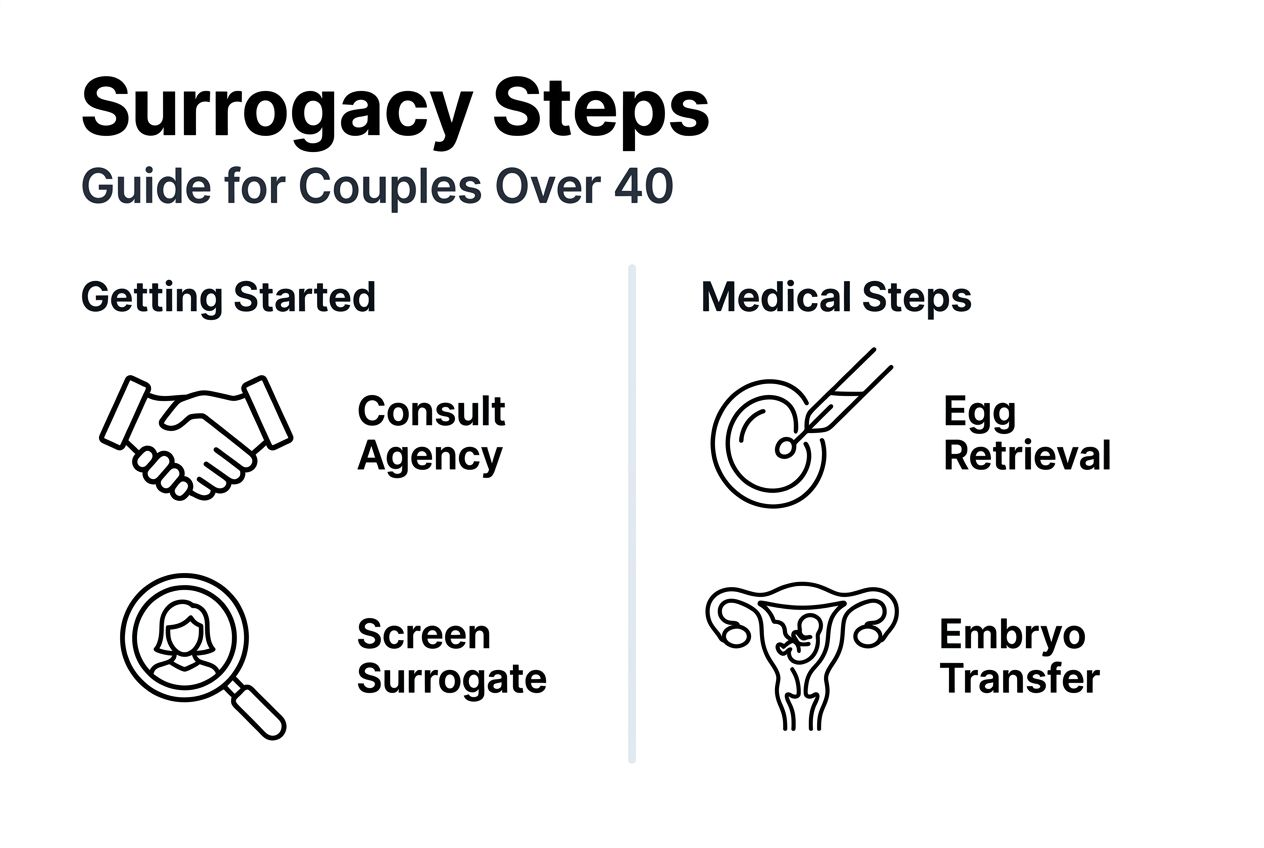
The IVF process follows these key steps:
Ovarian stimulation using hormone medications to produce multiple eggs
Egg retrieval performed under sedation when follicles reach optimal size
Sperm collection and laboratory fertilization creating embryos
Embryo culture monitoring development for three to five days
Embryo transfer placing one or two embryos into surrogate’s uterus
Post-transfer monitoring through blood tests confirming pregnancy
Age affects egg quality significantly. Women over 40 often use donor eggs to improve success rates. Discuss realistic expectations with your reproductive endocrinologist based on your specific fertility factors.
Pro Tip: Consider preimplantation genetic testing (PGT) to screen embryos for chromosomal abnormalities before transfer. This increases pregnancy success and reduces miscarriage risk, especially valuable for older intended parents.
Your surrogate receives medications preparing her uterine lining for embryo implantation. Estrogen thickens the endometrium, while progesterone creates a receptive environment. Timing these medications precisely improves pregnancy outcomes.
Medical protocols maximize success rates. Clinics monitor hormone levels, perform ultrasounds tracking follicle development, and adjust medications based on individual response. This personalized approach addresses your unique reproductive challenges.
Understanding the financial overview of surrogacy helps you budget for multiple IVF cycles if needed. Some couples require several attempts before achieving pregnancy, so plan finances accordingly.
Step 5: pregnancy monitoring and delivery
Close medical monitoring throughout approximately nine months ensures safe pregnancy and delivery. Your surrogate attends regular prenatal appointments tracking fetal development, maternal health, and potential complications. Standard pregnancy monitoring includes ultrasounds, blood tests, and physical examinations.
Pregnancy monitoring follows this typical schedule:
First trimester: appointments every four weeks
Second trimester: appointments every two to three weeks
Third trimester: weekly appointments until delivery
Additional visits if complications arise
Emotional and psychological support services help your surrogate navigate pregnancy challenges. Agencies provide counseling, support groups, and resources addressing physical discomfort, emotional changes, and relationship dynamics. This support improves pregnancy outcomes and surrogate satisfaction.
Planning for delivery includes selecting a hospital, discussing delivery preferences, and preparing contingency plans. Decide who attends the birth, what happens immediately after delivery, and how you handle unexpected complications. Ukrainian hospitals typically accommodate intended parents during delivery.
Pro Tip: Arrive in Ukraine at least two weeks before the due date. Babies arrive early sometimes, and you want to be present for the birth and handle immediate legal paperwork without travel stress.
Your agency coordinates logistics including hospital admission, medical staff communication, and translation services if needed. They ensure everyone understands the birth plan and your role as intended parents.
Contingency planning addresses potential complications like premature birth, cesarean delivery, or neonatal intensive care needs. Discuss these scenarios beforehand so everyone knows their responsibilities if emergencies occur.
Review surrogacy timelines and delivery expectations with your agency to prepare mentally and logistically for this culminating phase.
Step 6: post-birth legal procedures and custody transfer
Establishing legal parentage after birth requires specific steps in Ukraine. Post-birth legal processes take several weeks and prove essential for confirming your parental rights and your baby’s citizenship. Never skip or rush these procedures.
The legal process follows these steps:
Obtain hospital birth records naming you as legal parents
Register the birth with Ukrainian civil authorities within days
Apply for your baby’s birth certificate listing you as parents
Secure necessary apostilles validating Ukrainian documents internationally
Apply for your baby’s passport from your home country’s embassy
Complete any additional requirements your country mandates
Documentation requirements vary by your nationality. Some countries recognize Ukrainian birth certificates immediately, while others require additional legal proceedings. Research your specific requirements months before delivery to avoid delays.
Ukrainian law simplifies custody transfer for surrogacy arrangements. The surrogate has no parental rights, and you gain full legal parentage from birth. This contrasts with countries requiring adoption or court orders to establish parental status.
Timing matters critically for international travel. You cannot leave Ukraine until obtaining your baby’s passport and completing exit procedures. This process typically requires two to four weeks, though complications extend timelines.
Pro Tip: Work with immigration attorneys in both Ukraine and your home country simultaneously. They coordinate requirements ensuring you complete all necessary steps in the correct sequence without costly delays.
Navigate post-birth legal steps with experienced legal counsel who handles international surrogacy regularly. Their expertise prevents mistakes that could jeopardize your parental rights or delay bringing your baby home.
Some countries require DNA testing proving genetic connection to at least one intended parent. Complete this testing during your Ukraine stay to satisfy immigration requirements.
Common mistakes, troubleshooting, and success metrics
Legal counsel and thorough screening prove critical to avoiding delays. Proper legal and communication protocols prevent 70% of surrogacy failure points that derail journeys or create expensive complications. Invest in experienced professionals rather than cutting corners to save money.
Common mistakes to avoid include:
Skipping independent legal review of contracts
Choosing agencies based solely on lowest cost
Failing to verify surrogate screening thoroughness
Underestimating total financial requirements
Neglecting psychological support services
Assuming all countries recognize surrogacy equally
Maintain open communication between all parties throughout the journey. Regular updates, honest discussions about concerns, and proactive problem solving prevent small issues from becoming major conflicts. Schedule consistent check-ins even when everything proceeds smoothly.
Financial planning with contingency funds reduces surprises. Unexpected complications, extended stays, additional medical procedures, or legal delays can add thousands to your budget. Review detailed surrogacy costs in Ukraine and add 15 to 20 percent for unforeseen expenses.
“The difference between successful and failed surrogacy journeys often comes down to preparation, realistic expectations, and choosing experienced professionals who prioritize your family’s wellbeing over profits.”
Success metrics help you evaluate your journey’s progress. Timeline adherence indicates efficient coordination and minimal complications. Legal clarity ensures you understand your rights and obligations at every stage. Positive pregnancy and birth outcomes represent the ultimate goal.
Troubleshooting common issues requires quick action. If communication breaks down with your surrogate, involve your agency immediately to mediate. When legal questions arise, consult attorneys rather than making assumptions. Medical concerns demand prompt evaluation by qualified physicians.
Track these success indicators:
Meeting planned timeline milestones
Clear legal agreements protecting all parties
Healthy pregnancy progression
Positive relationships with surrogate and agency
Smooth completion of post-birth procedures
Realistic expectations improve satisfaction. Not every cycle results in pregnancy, legal processes take time, and international coordination involves complexity. Patience and flexibility help you navigate inevitable challenges without excessive stress.
Discover personalized surrogacy support with Nova Parent
Navigating international surrogacy over age 40 requires specialized expertise and compassionate support. Nova Parent surrogacy agency offers tailored services for couples pursuing their family dreams through Ukrainian surrogacy programs.

Our experienced team understands the unique challenges older intended parents face. We provide comprehensive support including surrogate matching, legal coordination, medical care management, and post-birth assistance. Transparent surrogacy costs with detailed breakdowns ensure you budget accurately without hidden fees surprising you.
Expert legal and psychological services smooth your entire journey. Our network includes fertility specialists, international lawyers, counselors, and support staff dedicated to your success. Ready to start your surrogacy journey with confidence? Schedule a consultation today to discuss your unique situation and explore how we can help you build your family.
Frequently asked questions
How long does the entire surrogacy process usually take for couples over 40?
The complete surrogacy journey typically spans 12 to 18 months from initial consultation through bringing your baby home. This timeline includes agency selection (one to two months), surrogate matching (one to three months), legal agreements (two to four weeks), IVF cycle (one to two months), pregnancy (nine months), and post-birth procedures (two to four weeks). Individual factors like medical complications, legal complexities, or matching delays can extend this timeframe. Couples using donor eggs may need additional time for donor selection and coordination.
What legal protections exist for intended parents and surrogates in international surrogacy?
Formal legal contracts define rights, responsibilities, and compensation for all parties before medical procedures begin. Ukrainian law provides strong protections recognizing intended parents as legal parents from birth, with surrogates having no parental claims. Contracts address medical decision-making, termination circumstances, confidentiality, and post-birth contact. International protections vary by country, so verify your home nation recognizes Ukrainian surrogacy agreements and permits bringing your baby home without additional legal proceedings.
How can couples over 40 prepare emotionally for the surrogacy journey?
Engage in professional counseling before starting and maintain support throughout the process. Connect with other couples who completed surrogacy, join online communities, and identify therapists experienced in reproductive challenges. Build a strong support network including family, friends, and mental health professionals. Maintain open communication with your surrogate and agency, discussing concerns promptly rather than letting them escalate. Set realistic expectations understanding that complications may arise and timelines may shift despite careful planning.
What are the typical costs involved in international surrogacy in Ukraine?
Surrogacy in Ukraine typically costs between $55,000 and $80,000, significantly lower than United States programs averaging $120,000 to $150,000. Expenses include agency fees, surrogate compensation, medical procedures, legal services, travel, and accommodations. Review detailed surrogacy costs in Ukraine with itemized breakdowns covering all phases. Build contingency funds adding 15 to 20 percent above estimates to handle unexpected complications, extended stays, or additional medical treatments. Transparent pricing from reputable agencies prevents surprise expenses derailing your financial planning.
Recommended
Comments